The Rottweiler is a medium to large size breed of domestic dog that originated in Rottweil, Germany. The dogs were known as "Rottweil butchers' dogs" (German: Rottweiler Metzgerhund) because they were used to herd livestock and pull carts laden with butchered meat and other products to market.[1] Some records[which?] indicate that earlier Rottweilers may have also been used for hunting, although the modern Rottweiler has a relatively low hunting instinct.
The Rottweiler was employed in its traditional roles until the mid-19th century when railroads replaced droving for getting livestock to market. While still used in herding, Rottweilers are now also used in search and rescue, as guide dogs for the blind, as guard or police dogs, and in other roles
Welcome to the wonderful world of Animal Pets. Here you will find pet and animal articles on everything from pet health to animal training as well as animal photography, bird watching and more..
Tuesday, 12 July 2011
Monday, 11 July 2011
Boston Terriers Breed
Boston Terriers Breed Introduction
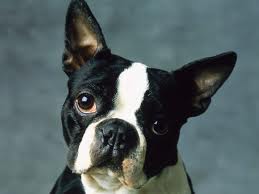
Boston Terriers always appears to be ready for the most formal of occasions with what appears to be tuxedo attire. Their personality likewise resembles that of the genteel, as they tend to be very well mannered.
With an expression of kindness in its eyes, the Boston Terrier can easily worm its way into the hearts of adults and children alike.
Boston Terriers are 10 to 17 inches (25 to 43 centimeters) in height and range in weight from 11 to 25 pounds (5 to 11 kilograms).
History of Breed
The Boston Terrier was one of the first breeds to be created in the United States. Its exact origin is unknown, but it appears to be a downsized version of the bull and terrier types of dogs that were very popular in early America.
Some claim that the breed descended from the crossing of an English bulldog with a white English terrier, while others assert that it descended from the Pit Bull, the Boxer, the Bull Terrier, the French Bulldog or the English Bulldog.
Needless to say, none of these theories is a known fact. What is known is that the breed was developed in the late 1800s, and it initially achieved popularity in Boston, Massachusetts.
Just as there are many theories as to the dog’s origination, it has been known by many names, including the “round-headed bull,” the “round-headed terrier,” the “Boston bull,” and even “bullet-head.” Fanciers of the dog named it the American Bull Terrier and formed a club by that name in 1889.
The name was not well received, however, and the breed was subsequently renamed after what is considered to be its birthplace, Boston. The name of “Boston Terrier” has since stuck, and was recognized by the American Kennel Club (AKC) in 1893.
Boston Terriers always appears to be ready for the most formal of occasions with what appears to be tuxedo attire. Their personality likewise resembles that of the genteel, as they tend to be very well mannered.
With an expression of kindness in its eyes, the Boston Terrier can easily worm its way into the hearts of adults and children alike.
Boston Terriers are 10 to 17 inches (25 to 43 centimeters) in height and range in weight from 11 to 25 pounds (5 to 11 kilograms).
History of Breed
The Boston Terrier was one of the first breeds to be created in the United States. Its exact origin is unknown, but it appears to be a downsized version of the bull and terrier types of dogs that were very popular in early America.
Some claim that the breed descended from the crossing of an English bulldog with a white English terrier, while others assert that it descended from the Pit Bull, the Boxer, the Bull Terrier, the French Bulldog or the English Bulldog.
Needless to say, none of these theories is a known fact. What is known is that the breed was developed in the late 1800s, and it initially achieved popularity in Boston, Massachusetts.
Just as there are many theories as to the dog’s origination, it has been known by many names, including the “round-headed bull,” the “round-headed terrier,” the “Boston bull,” and even “bullet-head.” Fanciers of the dog named it the American Bull Terrier and formed a club by that name in 1889.
The name was not well received, however, and the breed was subsequently renamed after what is considered to be its birthplace, Boston. The name of “Boston Terrier” has since stuck, and was recognized by the American Kennel Club (AKC) in 1893.
Monday, 4 July 2011
Dog training techniques
It is important to start training your new puppy as soon as you bring them home. Training can be done yourself or a professional can be hired. Local dog training classes are often available. Ask your veterinarian to recommend a trainer or look in your local newspaper for a trainer in your area.
There are two types of training: behavioral, and obedience.
Behavioral training prevents and or corrects bad habits that your puppy or dog may develop or already has developed. Jumping, car chasing, begging, climbing on furniture, and chewing are just a few. It is very important to be consistent during the training process. For example, do not let your puppy on the couch unless you are planning to allow them when they are full grown. This will confuse them, causing problems. Taking the time to learn dog psychology and satisfying the dog's natural instincts along with proper exercise will help you communicate to your dog and can mean the difference between success and failure.
Obedience training is training the dog to obey certain commands such as sit, stay, come and teaching them to heel. Training sessions should be frequent but short to prevent your dog from becoming bored: ten to fifteen minute sessions, two or three times a day will be sufficient.
Tip: training your dog right before meals will help them associate their meal with a reward for the training and also make them more interested in the food treat you use in your training session.Before giving a word command to your dog, speak its name to get its attention; then speak a one-word command such as "stay," "sit," "come" or "heel." Do not get impatient. You will probably have to repeat the command many times. Never use negative reinforcement. Do not call your dog to come to you for punishment because this will teach your dog not to come on command. Be sure to keep any frustration out of the tone of your voice. If you feel yourself becoming frustrated, take a break. Your dog can sense this and will start to associate training with your unhappiness. You can not hide your frustration from a dog. You cannot pretend. Dogs can feel human emotion, so stay relaxed, firm, and confident.
Some of the specific commands are "sit," "stay," "come," "down" and "heel." When speaking the commands, say them loudly and clearly, repeating them often. The dog may have to hear the commands over and over, but will soon begin to associate the word with its meaning. Always remember to praise your dog when they respond correctly. This will encourage your dog to perform correctly the next time. You may either use food, or affection such as a belly rub, a pet or verbal praise as the reward or both.A lot of puppy and dog training classes teach the heel command only in the advanced classes. The heel command should actually be one of the first things you teach your puppy or dog.
They need to learn how to follow. Once you establish this all other aspects of training will be easier and their behavior in general will be better as the dog will learn to respect you as the leader.
There are two types of training: behavioral, and obedience.
Behavioral training prevents and or corrects bad habits that your puppy or dog may develop or already has developed. Jumping, car chasing, begging, climbing on furniture, and chewing are just a few. It is very important to be consistent during the training process. For example, do not let your puppy on the couch unless you are planning to allow them when they are full grown. This will confuse them, causing problems. Taking the time to learn dog psychology and satisfying the dog's natural instincts along with proper exercise will help you communicate to your dog and can mean the difference between success and failure.
Obedience training is training the dog to obey certain commands such as sit, stay, come and teaching them to heel. Training sessions should be frequent but short to prevent your dog from becoming bored: ten to fifteen minute sessions, two or three times a day will be sufficient.
Tip: training your dog right before meals will help them associate their meal with a reward for the training and also make them more interested in the food treat you use in your training session.Before giving a word command to your dog, speak its name to get its attention; then speak a one-word command such as "stay," "sit," "come" or "heel." Do not get impatient. You will probably have to repeat the command many times. Never use negative reinforcement. Do not call your dog to come to you for punishment because this will teach your dog not to come on command. Be sure to keep any frustration out of the tone of your voice. If you feel yourself becoming frustrated, take a break. Your dog can sense this and will start to associate training with your unhappiness. You can not hide your frustration from a dog. You cannot pretend. Dogs can feel human emotion, so stay relaxed, firm, and confident.
Some of the specific commands are "sit," "stay," "come," "down" and "heel." When speaking the commands, say them loudly and clearly, repeating them often. The dog may have to hear the commands over and over, but will soon begin to associate the word with its meaning. Always remember to praise your dog when they respond correctly. This will encourage your dog to perform correctly the next time. You may either use food, or affection such as a belly rub, a pet or verbal praise as the reward or both.A lot of puppy and dog training classes teach the heel command only in the advanced classes. The heel command should actually be one of the first things you teach your puppy or dog.
They need to learn how to follow. Once you establish this all other aspects of training will be easier and their behavior in general will be better as the dog will learn to respect you as the leader.
German Shorthaired Pointer Right Breed for everybody
German Shorthaired Pointer
A versatile hunter and all-purpose gun dog, the German Shorthaired Pointer possesses keen scenting power and high intelligence. The breed is proficient with many different types of game and sport, including trailing, retrieving, and pointing pheasant, quail, grouse, waterfowl, raccoons, possum, and even deer. A medium-sized breed, he has an aristocratic bearing and can be solid liver or liver and white in color. A Look Back
The origin of the German Shorthaired Pointer is not clear, but the source of the breed seems to have been the German Bird Dog, related to the old Spanish Pointer, and various crossings with local German scent hounds and track and trail dogs. When the Germans introduced the English Pointers to lend elegance to the German Shorthaired Pointer prototype, the result was a utility dog that combined sporting virtue with clean lines, good looks and sound temperament.
Right Breed
The German Shorthaired Pointer thrives as part of an active family. He is an even-tempered, intelligent and loyal family watchdog that has enthusiasm for its work. An athlete, he can adapt to his living situation, but requires consistent exercise. The GSP’s short coat sheds, but grooming is minimal. Shetland Sheepdog protecting sheep
The Shetland Sheepdog, often known as the Sheltie, is a breed of herding dog.Shelties have the herding dog temperament. They are vocal, excitable, energetic dogs who are always willing to please and work hard. They are partly derived from dogs used in Shetland for herding and protecting sheep.
They are small to medium dogs, and they come in a variety of colors, such as sable/white, tri-color, and blue merle.Their early history is not well-known. They were originally a small mixed-breed dog, often 8–10 inches (200–250 mm) in height. It is thought that the original Shetland herding dogs were of Spitz type, and these were crossed with collie-type sheepdogs from mainland Britain.[1] In the early 20th century, James Loggie added a small show Rough Collie to the stock, and the modern Shetland sheepdog was established.[2] The original name of the breed was 'Shetland Collie', but this caused controversy among Rough Collie breeders, and the breed's formal name was changed to Shetland SheepdogRabies Treatment for dogs
Dog Rabies information
The rabies virus affects dogs and all other warm-blooded animals. In wildlife animals, rabies is commonly seen in foxes, skunks, raccoons and bats. Each of these species carries a variant strain of the rabies virus. All of these strains can affect animals. Domesticated animals such as cows, horses, dogs and cats commonly act as a source for human infections but people can be infected from wildlife sources as well, particularly bats.
Rabies Control
The first step to controlling rabies in dogs an other pets is vaccination. All healthy pets should be vaccinated. The rabies vaccine is very effective, inexpensive, and is usually given every 3 years. In horses, it is usually given every year. In most localities, the law requires rabies vaccinations for all pets.
The second step to rabies control is a thorough understanding of this terrible disease so that risk exposures or contact can be prevented. The third step toward controlling rabies is cooperation between veterinarians, the public, the public health system, and those government agencies who monitor and control rabies on a regional level. For example, in some parts of Canada, bait is dropped from airplanes into rural or countryside areas so that wildlife will eat the bait (disguised as food treats) laced with an effective protective vaccine. Public health departments also track and manage human exposures. Rabies moves to and from animals and people through a bite wound or through breaks in the skin or mucous membranes. It’s thought people can become infected by breathing air around bats, such as in bat caves where the virus is suspended in droplets in the air.
Rabies Treatment
Rabies is almost always fatal. However, if a dog or person is bitten by a rabid animal and begins treatment prior to experiencing symptoms, there is an effective post-exposure treatment, which involves an injection of immune globulin and several rabies vaccines given to the infected victim over a 28-day period.
Disease Progression
Once the rabies virus enters the body of the animal or person, it travels to the central nervous system along the nerve fibres. It sets up a base in the brain and spreads back out into the body using the nerves to move around. The virus particles end up in many body tissues. Of particular importance are the salivary glands. Once rabies viruses enter the salivary glands they're present in large numbers in saliva and are easily spread between animals or people via licking or biting.
Rabies Symptoms
Once infected, dogs and other animals may show widely differing symptoms depending on what stage of the infection they are in. Early in the infection they appear completely normal. This pre-symptom phase can last for long periods of time. A bite on the face will tend to lead to a shorter prodromal phase since the virus is close to the brain, while a bite on the tip of the tail or paw may result in a long phase because it takes longer for the virus to travel to and from the brain.
For a few days at the very end of this prodromal or normal-behaviour phase, rabid dogs and animals can pass the virus on to other animals or people. This is the greatest time of risk because the typical rabies behaviours are absent. Once clinical signs of illness start, the animal only has about a week to live. Typically a phase occurs where rabid animals becomes very nasty, and will be irritable and snap and bite without being provoked or bothered. They may attack. This phase is termed furious rabies because the animal seems uncontrollably angry. Finally, the animal becomes progressively paralyzed, termed dumb rabies, and dies because the muscles for control of swallowing and breathing, amongst others, lose their function.
Unfortunately, not all cases follow typical progressive symptoms. For example, rabid cats often become overly friendly and affectionate rather than vicious. They can snuggle up to a child and suddenly lash out with teeth and claws after appearing quiet and nice. A dog may just show what appears to be a paralyzed tongue hanging out. The dog may be quiet, with jaw hanging open and saliva dribbling out of the mouth. One might think he had something like a stick stuck in the roof of his mouth! How about a cow that is restless, foaming at the mouth and when approached, is irritable and grabs a person? Though cows do not have a pile of sharp teeth at the front of their mouth like dogs or cats, this can result in a bite that breaks the skin. How about a pony in a petting facility that gets "nippy" and bites those passing by? Affected animals may also have trouble drinking or eating, and run a fever.
Do these stories sound far fetched? They are all cases veterinarians have seen in practice, so never forget that any animal acting in any unusual fashion can be showing signs of rabies! That is why rabies is called the great pretender. It can look like many other conditions, and can be very different from the vicious biting rabid animal image we hear about.
The rabies virus affects dogs and all other warm-blooded animals. In wildlife animals, rabies is commonly seen in foxes, skunks, raccoons and bats. Each of these species carries a variant strain of the rabies virus. All of these strains can affect animals. Domesticated animals such as cows, horses, dogs and cats commonly act as a source for human infections but people can be infected from wildlife sources as well, particularly bats.
Rabies Control
The first step to controlling rabies in dogs an other pets is vaccination. All healthy pets should be vaccinated. The rabies vaccine is very effective, inexpensive, and is usually given every 3 years. In horses, it is usually given every year. In most localities, the law requires rabies vaccinations for all pets.
The second step to rabies control is a thorough understanding of this terrible disease so that risk exposures or contact can be prevented. The third step toward controlling rabies is cooperation between veterinarians, the public, the public health system, and those government agencies who monitor and control rabies on a regional level. For example, in some parts of Canada, bait is dropped from airplanes into rural or countryside areas so that wildlife will eat the bait (disguised as food treats) laced with an effective protective vaccine. Public health departments also track and manage human exposures. Rabies moves to and from animals and people through a bite wound or through breaks in the skin or mucous membranes. It’s thought people can become infected by breathing air around bats, such as in bat caves where the virus is suspended in droplets in the air.
Rabies Treatment
Rabies is almost always fatal. However, if a dog or person is bitten by a rabid animal and begins treatment prior to experiencing symptoms, there is an effective post-exposure treatment, which involves an injection of immune globulin and several rabies vaccines given to the infected victim over a 28-day period.
Disease Progression
Once the rabies virus enters the body of the animal or person, it travels to the central nervous system along the nerve fibres. It sets up a base in the brain and spreads back out into the body using the nerves to move around. The virus particles end up in many body tissues. Of particular importance are the salivary glands. Once rabies viruses enter the salivary glands they're present in large numbers in saliva and are easily spread between animals or people via licking or biting.
Rabies Symptoms
Once infected, dogs and other animals may show widely differing symptoms depending on what stage of the infection they are in. Early in the infection they appear completely normal. This pre-symptom phase can last for long periods of time. A bite on the face will tend to lead to a shorter prodromal phase since the virus is close to the brain, while a bite on the tip of the tail or paw may result in a long phase because it takes longer for the virus to travel to and from the brain.
For a few days at the very end of this prodromal or normal-behaviour phase, rabid dogs and animals can pass the virus on to other animals or people. This is the greatest time of risk because the typical rabies behaviours are absent. Once clinical signs of illness start, the animal only has about a week to live. Typically a phase occurs where rabid animals becomes very nasty, and will be irritable and snap and bite without being provoked or bothered. They may attack. This phase is termed furious rabies because the animal seems uncontrollably angry. Finally, the animal becomes progressively paralyzed, termed dumb rabies, and dies because the muscles for control of swallowing and breathing, amongst others, lose their function.
Unfortunately, not all cases follow typical progressive symptoms. For example, rabid cats often become overly friendly and affectionate rather than vicious. They can snuggle up to a child and suddenly lash out with teeth and claws after appearing quiet and nice. A dog may just show what appears to be a paralyzed tongue hanging out. The dog may be quiet, with jaw hanging open and saliva dribbling out of the mouth. One might think he had something like a stick stuck in the roof of his mouth! How about a cow that is restless, foaming at the mouth and when approached, is irritable and grabs a person? Though cows do not have a pile of sharp teeth at the front of their mouth like dogs or cats, this can result in a bite that breaks the skin. How about a pony in a petting facility that gets "nippy" and bites those passing by? Affected animals may also have trouble drinking or eating, and run a fever.
Do these stories sound far fetched? They are all cases veterinarians have seen in practice, so never forget that any animal acting in any unusual fashion can be showing signs of rabies! That is why rabies is called the great pretender. It can look like many other conditions, and can be very different from the vicious biting rabid animal image we hear about.
Sunday, 3 July 2011
Doberman Pinscher
The Doberman Pinscher is known best, perhaps, for its guarding qualities. But the dog of yesterday’s scary movies has been transformed through years of meticulous breeding into a fun-loving, exceptional athlete and a watchful, protective, and above all, discerning companion who has no trouble accurately distinguishing between friend and foe. The key word is discerning.
Among the top smartest canine breeds in the world, the Doberman Pinscher is breathtakingly perceptive, intuitive, and sensitive. Properly trained and socialized, your Doberman won’t just place itself between you and a visible threat. As owner after owner can attest, your Doberman will anticipate that threat to you and your child, sometimes in uncanny ways.
Naturally, we’re biased. For us, the Doberman is, paws down, the world’s Number One breed. But that said, the Doberman just isn’t for everyone. Dobermans require a calm, stable, firm, and smart pack leader, or they will assume that role for you. They must also have plenty of vigorous exercise every day, and stimulating mental challenges. Without these things, they will become destructive of themselves and of your home.
One last thing: Dobermans are nick-named “Velcro dogs” because they stick to their people. Heaven for a Doberman is leaning into you for a prolonged head rub. Balancing that well-known guardian instinct is the world’s most loving heart and a sense of humor that will keep you laughing its whole life long.
Among the top smartest canine breeds in the world, the Doberman Pinscher is breathtakingly perceptive, intuitive, and sensitive. Properly trained and socialized, your Doberman won’t just place itself between you and a visible threat. As owner after owner can attest, your Doberman will anticipate that threat to you and your child, sometimes in uncanny ways.
Naturally, we’re biased. For us, the Doberman is, paws down, the world’s Number One breed. But that said, the Doberman just isn’t for everyone. Dobermans require a calm, stable, firm, and smart pack leader, or they will assume that role for you. They must also have plenty of vigorous exercise every day, and stimulating mental challenges. Without these things, they will become destructive of themselves and of your home.
One last thing: Dobermans are nick-named “Velcro dogs” because they stick to their people. Heaven for a Doberman is leaning into you for a prolonged head rub. Balancing that well-known guardian instinct is the world’s most loving heart and a sense of humor that will keep you laughing its whole life long.
Subscribe to:
Posts (Atom)